
Current location:Home > Product Center > Lactic Acid
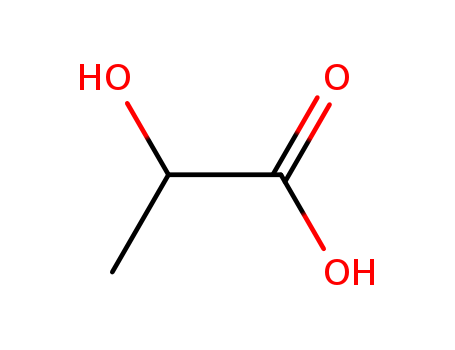
Lactic Acid
- Name Lactic Acid
- CAS 50-21-5
- Purity 99%
Product Details
Factory Export Top Purity Lactic Acid 50-21-5 In Stock We provide high quality Lactic acid (CAS 50-21-5), at a very affordable prices to our customers.
1.What is the Lactic acid ?
Lactic acid (2-hydroxypropionic acid, CH3-CHOH-COOH) is the most widely occurring organic acid in nature. Due to its chiral a-carbon atom, lactic acid (LA) has two enantiomeric forms. Of these, L-(+)-lactic acid is more important in food and pharmaceutical industries because humans have only L-lactate dehydrogenase. The chemical behavior of lactic acid is mostly determined by the two functional groups. Besides the acidic character in aqueous medium, the bifunctionality (a terminal carboxylic acid and a hydroxyl group) allows lactic acid molecules to form ‘‘interesters’’ such as the cyclic dimers, the trimers, or longer lactic acid oligomers. After its first isolation by the Swedish chemist Scheel in 1780 from sour milk, lactic acid has been produced commercially since the 1880s in the United States and later in Europe. Worldwide, lactic acid production was approximately 250,000 metric tons per year in 2012 and is expected to reach 330,000 metric tons by the year 2015, with an average price of 1.25 US$ per kilogram in 2013 (food grade, 80–85 % purity). Approximately 85 % of the demand for LA is from the food industry. The primary use of lactic acid is as a pH-adjusting agent in the beverage sector and as a preservative in the food industry. It is included in the Generally Recognized as Safe (GRAS) by the U.S. Food and Drug Administration [158] as a food ingredient and was deemed safe by the European Food Safety Authority as well [159]. The acceptable daily intake for LA was defined by the Joint FAO/WHO Expert Committee on Food Additives as ‘‘not limited,’’ and it is also supported by the Scientific Committee of Food. In recent decades, the consumption of lactic acid due to its novel applications has grown quite rapidly, by 19 % per year. Nonfood use of lactic acid for polymer production contributes to this growth. Biodegradable polylactic acid is considered to be an environmentally friendly alternative to other plastics from petroleum. It is used in various fields, including drug delivery systems, medical devices, fibers, and packaging materials. Lactic acid can be produced via chemical synthesis or carbohydrate fermentation. The chemical route has various issues, including toxic raw materials, low conversion rates, and especially the inability to produce the optically pure isomer. Therefore, approximately 90 % of lactic acid worldwide is produced by biotechnological processes, namely fermentations using renewable resources, which is relatively fast, economical, and able to supply selectively one or two stereoisomers of lactic acid.
Lactic Acid is an acidulant that is a natural organic acid present in milk, meat, and beer, but is normally associated with milk. it is a syrupy liquid available as 50 and 88% aqueous solutions, and is mis- cible in water and alcohol. it is heat stable, nonvolatile, and has a smooth, milk acid taste. it functions as a flavor agent, preservative, and acidity adjuster in foods. it is used in spanish olives to prevent spoilage and provide flavor, in dry egg powder to improve disper- sion and whipping properties, in cheese spreads, and in salad dress- ing mixes.
2.What is the CAS number for Lactic acid ?
The CAS number of Lactic acid is 50-21-5.
More information of Lactic acid 50-21-5 are:
|
CAS?Number |
50-21-5 |
|
Density |
1.277 g/cm3 |
|
Melting Point |
18 °C |
|
Boiling Point |
227.561 °C at 760 mmHg |
|
Flash Point |
109.936 °C |
|
Vapor Pressure |
0.015mmHg at 25°C |
|
Refractive Index |
n20/D 1.4262 |
|
HS CODE |
29181100 |
|
PSA |
57.53000 |
|
LogP |
-0.54820 |
|
Pka |
3.08(at 100℃) |
3.What is the molecular formula of Lactic acid ?
The chemical formula of?Lactic acid is C3H6O3 which containing 3 Carbon atoms,6 Hydrogen atoms and 3 Oxygen atoms,and the molecular weight, and the molecular weight of Lactic acid is 90.0788
4.What is Lactic acid(50-21-5)used for?
Lactic acid (2-hydroxypropionic acid, CH3-CHOH-COOH) is the most widely occurring organic acid in nature. Due to its chiral a-carbon atom, lactic acid (LA) has two enantiomeric forms. Of these, L-(+)-lactic acid is more important in food and pharmaceutical industries because humans have only L-lactate dehydrogenase. The chemical behavior of lactic acid is mostly determined by the two functional groups. Besides the acidic character in aqueous medium, the bifunctionality (a terminal carboxylic acid and a hydroxyl group) allows lactic acid molecules to form ‘‘interesters’’ such as the cyclic dimers, the trimers, or longer lactic acid oligomers. After its first isolation by the Swedish chemist Scheel in 1780 from sour milk, lactic acid has been produced commercially since the 1880s in the United States and later in Europe. Worldwide, lactic acid production was approximately 250,000 metric tons per year in 2012 and is expected to reach 330,000 metric tons by the year 2015, with an average price of 1.25 US$ per kilogram in 2013 (food grade, 80–85 % purity). Approximately 85 % of the demand for LA is from the food industry. The primary use of lactic acid is as a pH-adjusting agent in the beverage sector and as a preservative in the food industry. It is included in the Generally Recognized as Safe (GRAS) by the U.S. Food and Drug Administration [158] as a food ingredient and was deemed safe by the European Food Safety Authority as well [159]. The acceptable daily intake for LA was defined by the Joint FAO/WHO Expert Committee on Food Additives as ‘‘not limited,’’ and it is also supported by the Scientific Committee of Food. In recent decades, the consumption of lactic acid due to its novel applications has grown quite rapidly, by 19 % per year. Nonfood use of lactic acid for polymer production contributes to this growth. Biodegradable polylactic acid is considered to be an environmentally friendly alternative to other plastics from petroleum. It is used in various fields, including drug delivery systems, medical devices, fibers, and packaging materials. Lactic acid can be produced via chemical synthesis or carbohydrate fermentation. The chemical route has various issues, including toxic raw materials, low conversion rates, and especially the inability to produce the optically pure isomer. Therefore, approximately 90 % of lactic acid worldwide is produced by biotechnological processes, namely fermentations using renewable resources, which is relatively fast, economical, and able to supply selectively one or two stereoisomers of lactic acid.
InChI:InChI=1/C3H6O3/c1-2(4)3(5)6/h2,4H,1H3,(H,5,6)/p-1/t2-/m1/s1
Relevant articles related to Lactic acid:
|
Article |
Source |
|
S-2-Hydroxyacylglutathione-Derivatives: Enzymatic Preparation, Purification and Characterisation |
Clelland, James D.,Thornalley, Paul J. , p. 3009 - 3016 (2007/10/02) |
5.Factory Export Top Purity Lactic Acid 50-21-5 In Stock
Hebei Lvyang Biotechnology Co., Ltd. is a quality supplier of Lactic acid. Our main goal is customer satisfaction. Contact us to negotiate the best price for your business on Lactic acid 50-21-5.
Related products
-
 Sodium Anisate
CAS:20780-49-8
-
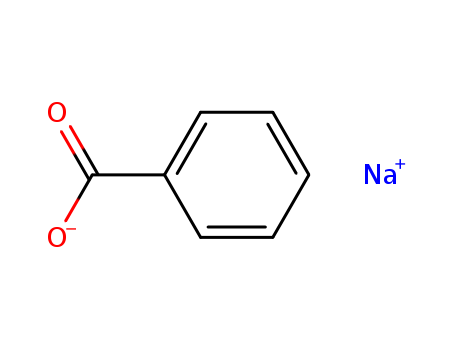 Sodium Benzoate
CAS:532-32-1
-
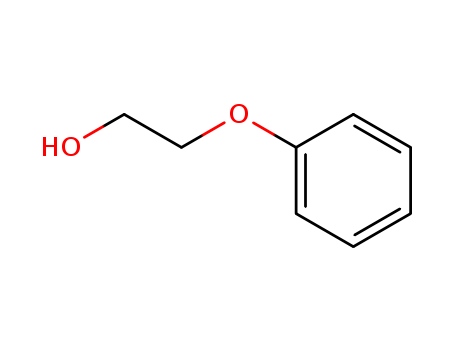 Phenoxyethanol
CAS:122-99-6
-
 Mandelic Acid
CAS:611-71-2